SUV shoppers seeking a top-quality, value-rich compact model will want to compare the Subaru Crosstrek vs. Toyota Corolla Cross. These two vehicles compete in the competitive compact SUV segment, but which one comes out on top in terms of specs and amenities? Take a look at the detailed Subaru Crosstrek vs. Toyota Corolla Cross comparison from Capital Subaru of Greenville below.
To give you a preview of the 2026 Crosstrek and 2026 Corolla Cross, check out the standard, base-trim specs of each below.
← Drag to scroll →
| 2026 Subaru Crosstrek Base | 2026 Toyota Corolla Cross L | |
|---|---|---|
| Engine | 2.5L 4-cyl | 2.0L 4-cyl |
| Horsepower | 180 | 169 |
| Torque | 178 lb-ft | 151 lb-ft |
| Drivetrain | Symmetrical AWD | FWD (AWD avail) |
| Transmission | CVT | CVT |
| Max EPA-Est. MPG (Cty / Hwy) | 26 / 331 | 31 / 332 |
| Fuel Tank Capacity | 16.6 gal | 12.4 gal |
| Length | 176.4 in | 176.1 in |
| Width | 70.9 in | 71.9 in |
| Height | 62.8 in | 64.9 in |
| Ground Clearance | 8.7 in | 8.1 in |
| Curb Weight | 3,296 lbs | 3,097 lbs |
| Passenger Volume | 100.5 cu ft | 94.9 cu ft |
| Cargo Space (Behind 2nd / 1st Row) | 19.9 / 54.7 cu ft | 24 / 46.9 cu ft |
Let’s start our head-to-head comparison of the Toyota Corolla Cross vs. Subaru Crosstrek by looking at the power and performance each offers.
A 2.5-liter SUBARU BOXER four-cylinder engine motivates the new Crosstrek, generating 180 horsepower and 178 pound-feet of torque. It works with a Lineartronic CVT with Adaptive Control, Incline Start Assist, and an eight-speed manual mode with paddle shifters. This highly efficient and capable transmission is coupled to the carmaker’s legendary Symmetrical AWD, a race-proven system that ensures the Crosstrek is eager to take on various surfaces and weather conditions.
In contrast, the Corolla Cross relies on a smaller, less potent 2.0-liter four-cylinder, producing just 169 horsepower and 151 pound-feet of torque. Its CVT is paired with a FWD layout in standard form, but AWD is available.
Drivers planning all-terrain adventures will undoubtedly appreciate the inclusion of Symmetrical AWD and 8.7 inches of ground clearance as standard on the Crosstrek, along with the following:
When it comes to fuel economy, the Subaru Crosstrek holds its own against the less powerful Corolla Cross. Drivers can expect their Crosstrek to return up to an EPA-estimated 26/33 MPG (City/Highway)1 rating. Meanwhile, the Corolla Cross reaches an EPA-estimated 31/33 MPG (City/Highway).2 To boot, the Subaru holds 16.6 gallons of fuel, while the Corolla Cross can only be filled up to its 12.4-gallon limit.
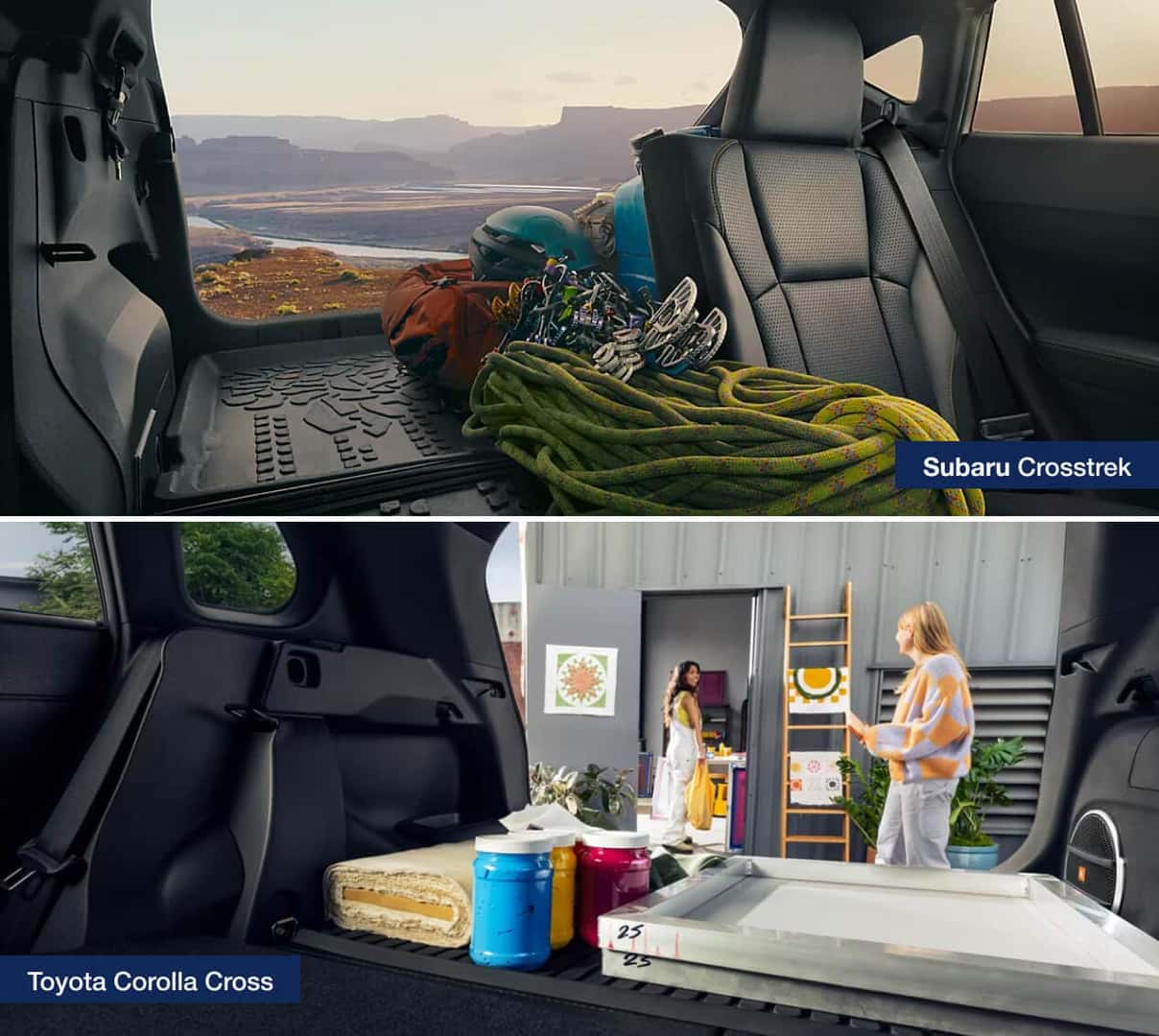
Even though these small sport-utes are similarly sized (176.4 inches vs. 176.1 inches in length), the slightly longer Crosstrek has big advantages inside. It boasts up to 100.5 cubic feet of passenger volume, surpassing the smaller Corolla Cross and its maximum of 94.9 cubic feet.
These competing SUVs are neck and neck regarding cargo volume behind the second row, but when all rear seating is folded, the Crosstrek comes out on top once again. Its 54.7 cubic feet of maximum cargo space easily tops the Corolla Cross, which has just 46.9 cubic feet.
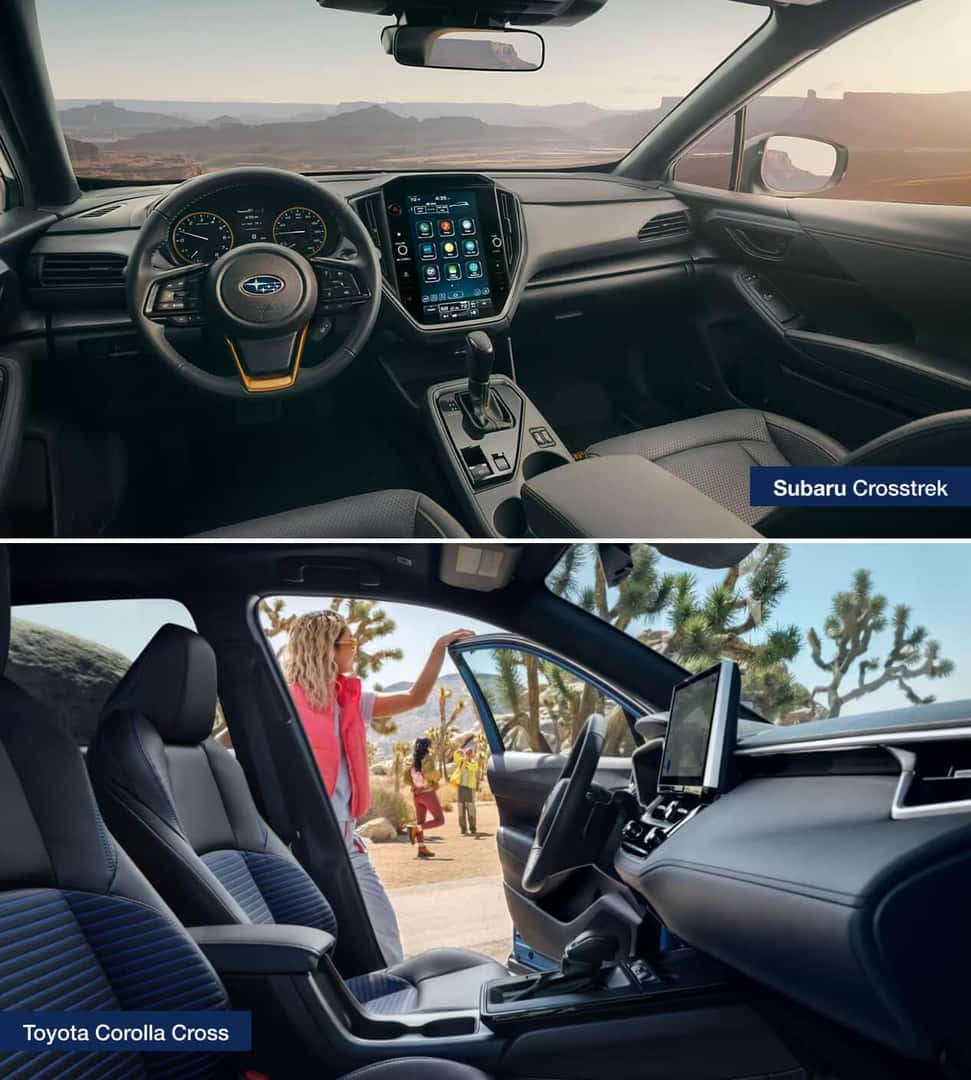
Looking beyond the cabin capacities, the winning streak for the new Subaru Crosstrek continues when you compare interior amenities.
For instance, the new Crosstrek lineup at Capital Subaru of Greenville offers the following available equipment:
The Corolla Cross is available with these features:
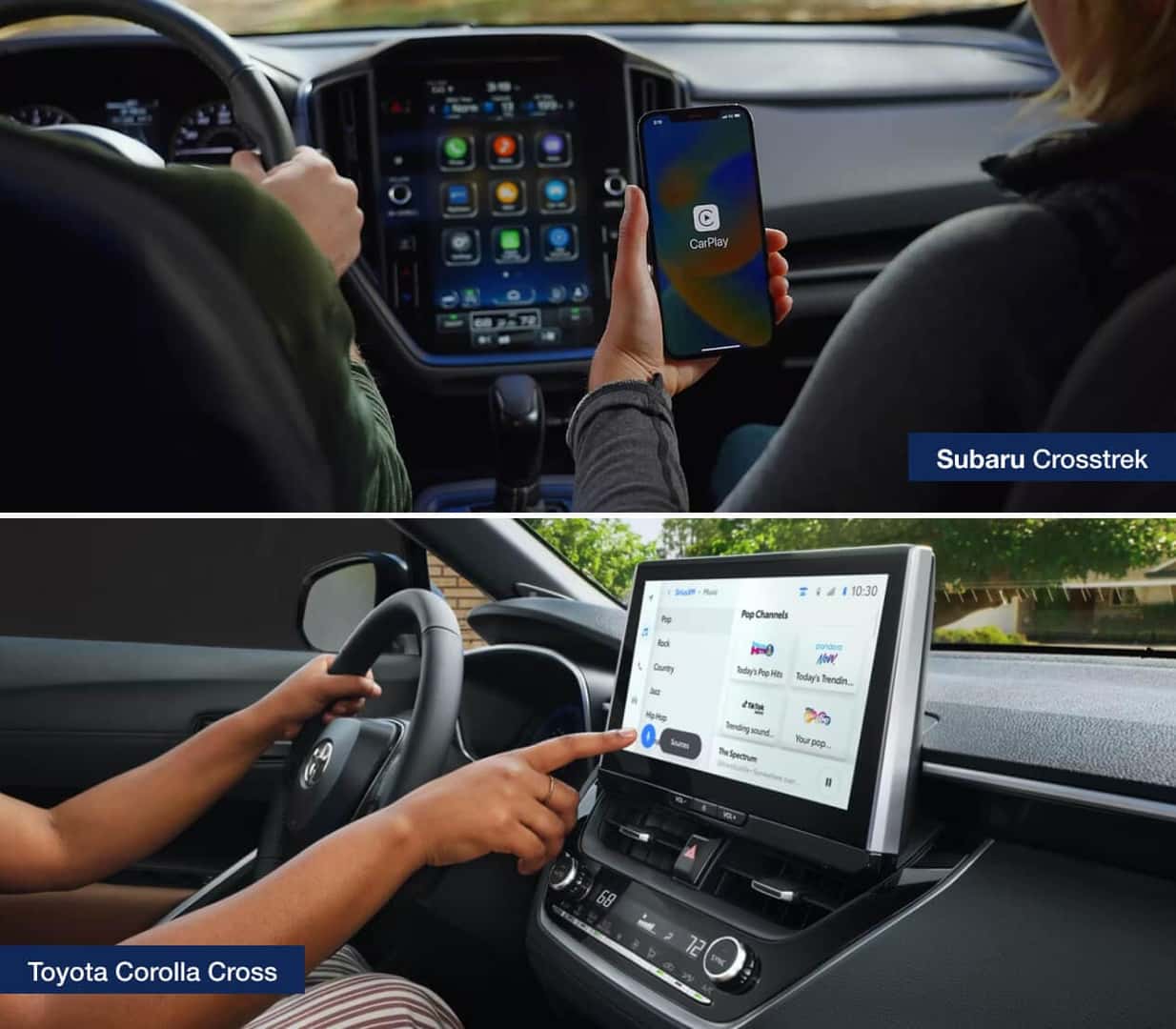
Most versions of the new Crosstrek are fitted with an 11.6-inch touchscreen, paired with six speakers or the 10-speaker Harman Kardon® premium audio system on the high-end Crosstrek Wilderness. The entry-level trim features a dual 7-inch multimedia system and four speakers. Wireless Apple CarPlay® and Android Auto™ integration is paired with the high-powered 11.6-inch touchscreen.
The Corolla Cross starts with an 8-inch touchscreen, and its available multimedia display only reaches 10.5 inches in higher trims. Wireless Apple CarPlay® and Android Auto™ capability is also offered in this Toyota SUV.
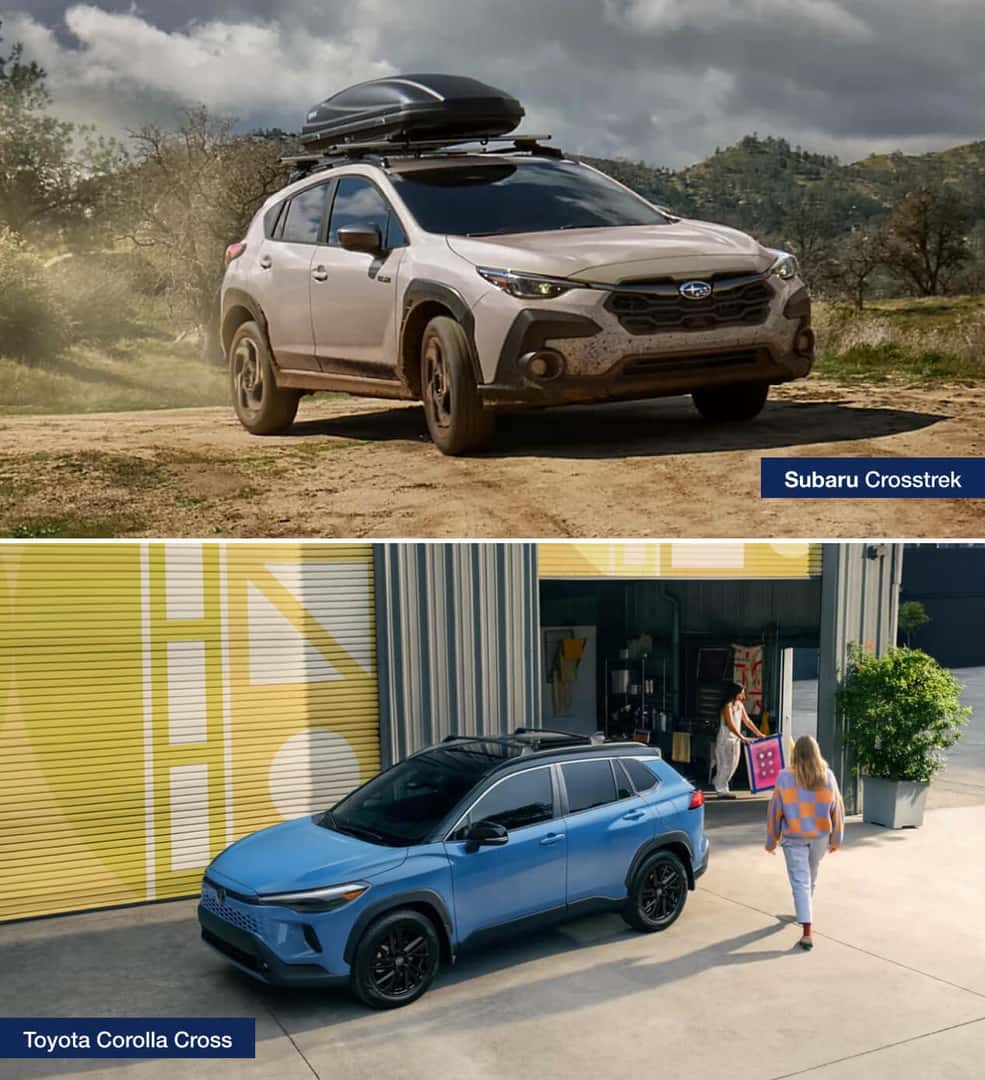
If you’re curious how the new Subaru Crosstrek vs. Toyota Corolla Cross compare in safety and driver-assist systems, we have you covered. The Subaru EyeSight Driver Assist Technology in the new Crosstrek includes the following standard features:
The Toyota Safety Sense 3.0 suite on the Corolla Cross brings technologies such as these:
Comparing the new Subaru Crosstrek vs. Toyota Corolla Cross in terms of trim levels, we find the following variants available:
See our Subaru Crosstrek specials for enticing incentives on trim levels like these.
The Toyota model comes in the following:
Both compact SUVs also offer hybrid variants, which are compared separately. When you’re ready to tour and test-drive the Crosstrek, contact Capital Subaru of Greenville.
The Subaru Crosstrek arguably has better AWD capability. Every new Crosstrek comes with legendary Subaru Symmetrical All-Wheel Drive, the gold standard for all-weather and all-terrain capability in compact SUVs. The Toyota Corolla Cross, on the other hand, is only available with AWD, as it comes standard with FWD. Its AWD system isn’t quite as off-road capable, either.
The Subaru Crosstrek has more horsepower than the Toyota Corolla Cross. The 2026 Crosstrek generates 180 horsepower and 178 pound-feet of torque from its larger 2.5-liter SUBARU BOXER engine. The Corolla Cross settles for a smaller, less powerful 2.0-liter engine, developing just 169 horsepower and 151 pound-feet of torque. Test-drive a Crosstrek to experience its robust performance.
We believe the Subaru Crosstrek is better for off-road driving than the Corolla Cross. The Subaru model is outfitted for all-terrain exploration with its standard Symmetrical AWD system and 8.7 inches of ground clearance. The Toyota model is mainly meant for on-road driving, as its off-road capabilities aren’t a focus of this SUV. The Corolla Cross has less ground clearance, too, at 8.1 inches.
1EPA fuel economy estimates. Actual mileage will vary with driving conditions and your vehicle’s condition.
2Use for comparison purposes only. Your mileage will vary for many reasons, including your vehicle’s condition and how/where you drive. See www.fueleconomy.gov.